Research use only. Not for human or veterinary use. €200 minimum order
For research use only. Products sold by Peptide Shop are intended for in-vitro laboratory research only. Not for human or veterinary diagnostic, therapeutic, cosmetic or consumption purposes.
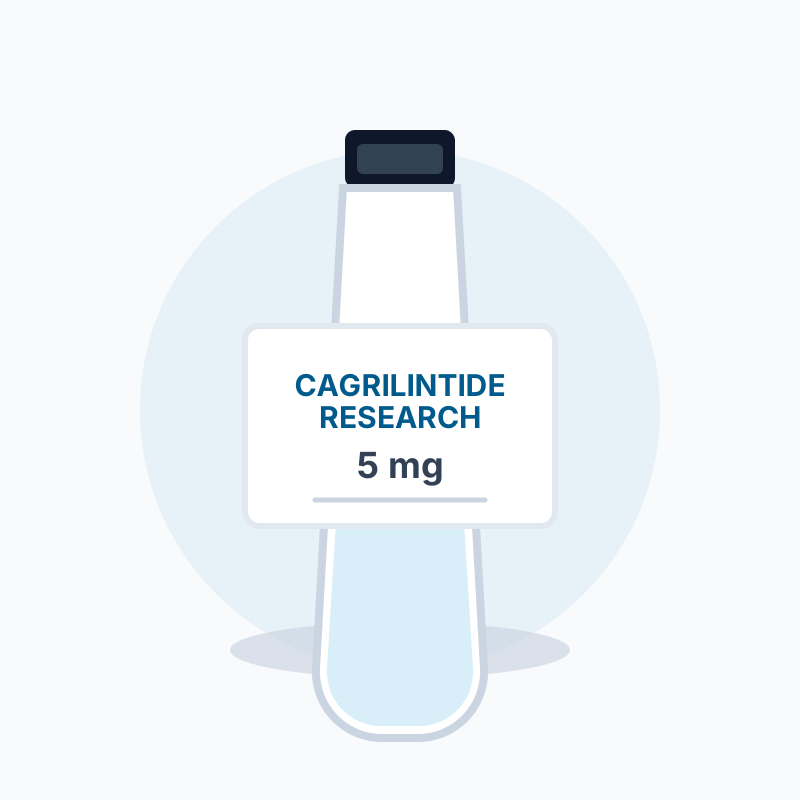
Cagrilintide 5 mg — ≥99 % HPLC product vial
Diabetes & Metabolism

Cagrilintide 5 mg — ≥99 % HPLC

Cagrilintide amylin analogue for metabolic and satiety-pathway research. ≥99% HPLC purity with COA. RUO.

≥ 99% COA supported RUO
CAS
2375614-45-8
Molecular weight
3962.4 g/mol
Storage
-20°C recommended (research-only)
Package sizes
1 × 5 mg vial

Description

Cagrilintide 5 mg research overview

Cagrilintide amylin analogue for metabolic and satiety-pathway research. ≥99% HPLC purity with COA. RUO.

Cagrilintide is an amylin analogue studied in appetite, satiety and metabolic signalling research models.

Peptide Shop supplies Cagrilintide 5 mg as a sealed research material with lot-level documentation where available. This product is supplied for in-vitro laboratory research only and is not intended for human or veterinary diagnostic, therapeutic, cosmetic or consumption purposes.

Research use

  • Amylin receptor pathway studies
  • Satiety and metabolic-response models
  • Combination research with GLP-1 pathway compounds

Best grouped with GLP-1 and incretin products in the diabetes and weight-loss hubs.

Sequence and analytical data

FieldDetail
Product IDpeptide-cagrilintide
Package size1 × 5 mg vial
CAS number2375614-45-8
Molecular weight3962.4 g/mol
Purity≥ 99%
Storage-20°C recommended (research-only)

Batch-specific documentation may include HPLC purity, identity confirmation and lot information. Refer to the supplied COA or the COA policy for current documentation scope.

Reconstitution and handling

Allow lyophilised material to equilibrate before opening to reduce condensation risk. Add validated solvent slowly down the vial wall, avoid vigorous shaking, and record the final concentration in the laboratory notebook or LIMS.

Use aseptic technique, calibrated pipettes or syringes, and validated diluent choices for the assay system. Reconstituted materials should be aliquoted where appropriate to reduce repeated freeze-thaw exposure.

Storage

Store unopened material according to the stated condition: -20°C recommended (research-only). Keep vials sealed, dry and protected from light. Reconstituted solutions should be stored under validated laboratory conditions and discarded according to internal SOPs and applicable research-waste rules.

Research-use statement

Cagrilintide 5 mg is sold by Peptide Shop for research use only. It is not a medicine, food, cosmetic, supplement or diagnostic product. Buyers are responsible for ensuring lawful purchase, storage, handling and disposal under their institutional and local requirements.
Sequence & data

Product IDpeptide-cagrilintide
CAS2375614-45-8
Molecular weight3962.4 g/mol
Purity≥ 99%

Storage & handling

-20°C recommended (research-only)

Keep lyophilised material sealed and protected from moisture. Reconstituted materials should be handled according to validated laboratory protocols and disposed of as research waste.

Certificate of analysis

Batch-specific COA documentation is supplied according to the COA policy and may include HPLC purity, identity and lot information where available.

Other languages

FAQs

What is Cagrilintide used for in research?

Cagrilintide is used in metabolic research to study amylin receptor signalling, appetite regulation, gastric emptying, and glucagon suppression. It provides a long-acting tool for investigating amylin's role in energy homeostasis.

How is Cagrilintide different from pramlintide?

Cagrilintide is a long-acting amylin analog with an acylated fatty acid side chain enabling weekly research dosing, while pramlintide requires more frequent administration. This extended duration enables different experimental paradigms.

What is amylin's role in metabolism?

Amylin is co-secreted with insulin from pancreatic beta cells. It slows gastric emptying, suppresses glucagon secretion, and promotes satiety through central nervous system actions. Cagrilintide enables research into these pathways.

How should Cagrilintide be stored?

Store lyophilised Cagrilintide at -20°C. Once reconstituted, keep at 2-8°C and use within 3 weeks. The fatty acid modification provides good stability but standard peptide handling applies.

What purity is your Cagrilintide?

Our Cagrilintide is ≥99% pure as verified by HPLC. Each batch includes a Certificate of Analysis with purity data and mass spectrometry identity confirmation.

How do I reconstitute Cagrilintide?

Reconstitute in sterile bacteriostatic water or appropriate buffer. Add solvent slowly and gently swirl to dissolve. Avoid shaking.

Can Cagrilintide be studied with GLP-1 agonists?

Yes, research often investigates cagrilintide in combination with semaglutide (the 'CagriSema' approach) to study complementary satiety mechanisms. Both peptides are available from Peptide Shop.

What sizes are available?

Cagrilintide is available in 2mg and 5mg vials suitable for various research scales.

What is cagrilintide?

Cagrilintide (AM833) is a long-acting synthetic amylin and calcitonin receptor agonist studied in metabolic research. Unlike GLP-1 agonists, it targets amylin receptors, making it a unique tool for studying complementary appetite-regulating pathways. CAS number 2413571-02-3.

What makes cagrilintide different from semaglutide and tirzepatide?

Cagrilintide acts via amylin and calcitonin receptors, while semaglutide, tirzepatide, and retatrutide target incretin (GLP-1/GIP) receptors. This distinct mechanism makes it valuable for studying combined amylin/GLP-1 pathway interactions.

What is the molecular structure of cagrilintide?

Cagrilintide is a 33-amino acid synthetic peptide with a fatty acid conjugation that extends plasma half-life. CAS number 2413571-02-3.

What documentation is included with cagrilintide?

Each order includes a lot-specific COA with HPLC purity data and identity confirmation. HPLC and mass spectrometry data are provided where available, given synthesis complexity.